
Digital twin ·
The value of connecting building data
Start with one building and one practical operational task. A shared data foundation can be reused for energy monitoring, space use and maintenance.
Open the full-size figure (new tab)
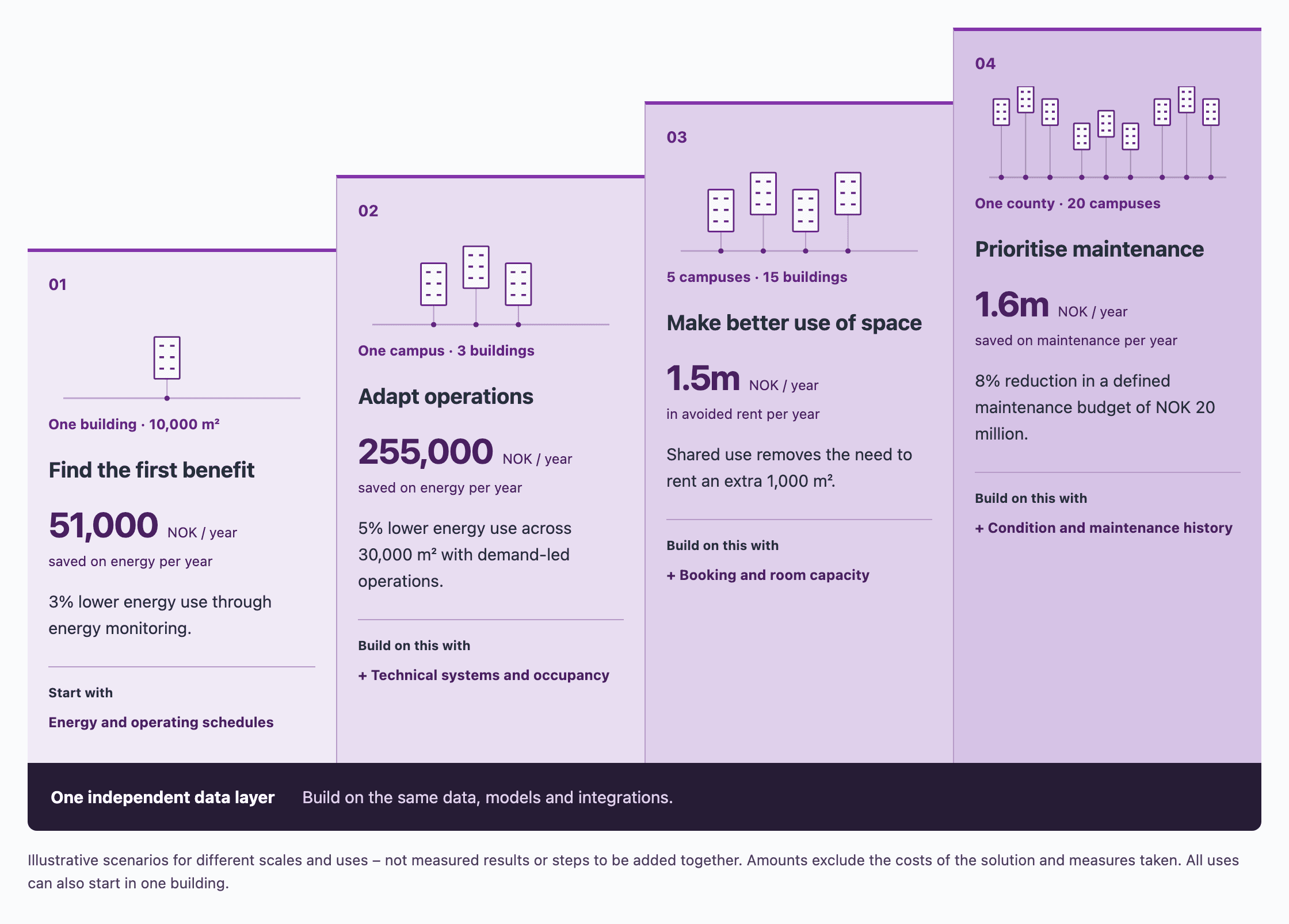
The figure illustrates a possible journey towards realising value while building an independent data layer for a smart campus. Source: Skogli digital (in Norwegian).
Building data becomes more useful when it can be viewed in context. An independent data layer links information from different systems to the same buildings, rooms and technical systems. New applications can then build on models and integrations already in place.
One foundation, several uses
Energy data and operating schedules can help identify unnecessary consumption. Combined with occupancy data, they can inform adjustments to operations based on actual use. Booking information and room capacity can highlight opportunities for shared use, while condition data and maintenance history can support the prioritisation of inspections and measures.
Value comes from acting on the insights. Analyses need to take account of data quality, local context and professional judgement. The full article’s illustrative calculations show possibilities under specific assumptions – they are neither measured project results nor guaranteed savings.
Start small and build on what works
Begin with the data you have, choose a practical task and track the effects of the measures taken. Expand when the value is clear.
Smart Campus NMBU already has many of the data foundations and integrations in place, with quality assurance and further development continuing. Experiences are shared on smartcampus.no so that other universities and colleges can build on them.